Discover
Why Morocco
A land of two coasts and two mountain ranges, a millennium of Amazigh, Arab and Andalusian history, and a cuisine that earned its own line on UNESCO's heritage list.
In Short
- ◆Morocco borders both the Atlantic Ocean and the Mediterranean Sea, with the Rif and Atlas mountains creating strikingly different climates within a short drive.
- ◆Currency is the Moroccan Dirham (MAD); many nationalities (US, UK, EU, Canada) can visit visa-free for up to 90 days.
- ◆Best time to visit: spring (March–May) and autumn (September–November) for the mildest temperatures nationwide.
- ◆Moroccan couscous is inscribed on UNESCO's Representative List of the Intangible Cultural Heritage of Humanity.
Climate & Geography
A Land of Contrasts
Morocco borders both the Atlantic Ocean and the Mediterranean Sea, with the Rif and Atlas mountain ranges carving the country into strikingly different climates. Marrakech sits at the foot of the snow-capped High Atlas; Casablanca opens onto the Atlantic; Tangier looks out over the strait where the two seas meet Europe. Few countries pack this much geography into so short a flight between cities.
History & Culture
Layers of Civilisation
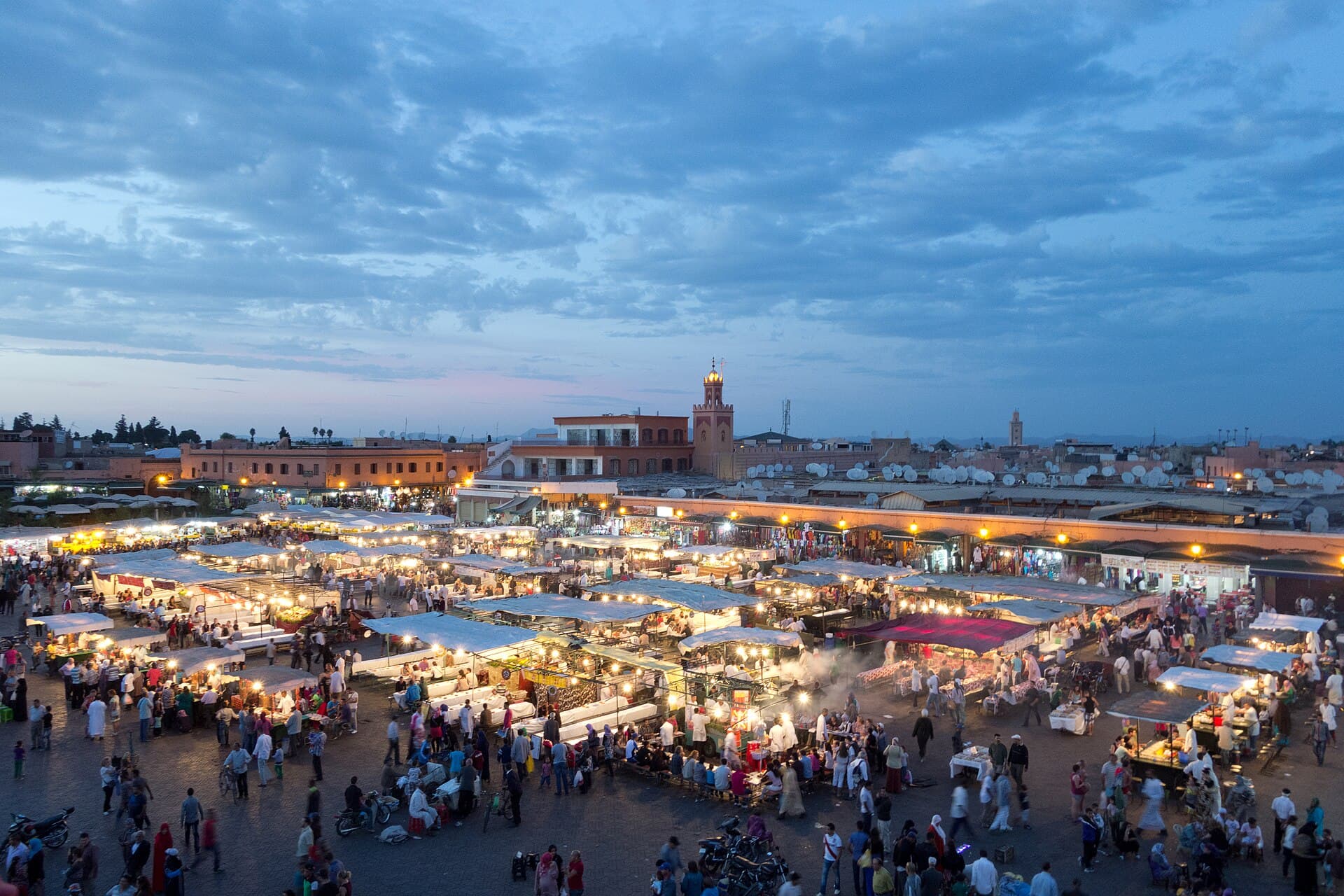
Amazigh (Berber), Arab, Andalusian and French influences overlap in every city we work in — from the UNESCO-listed Medina of Marrakech to Tangier's Portuguese-era Kasbah and Casablanca's Mauresque Art-Deco boulevards. It is a history you can still walk through, not just read about.
A Modern Society
Tradition Meets Momentum
Casablanca is Morocco's economic engine and home to Tanger Med, one of the largest ports on the Mediterranean. Marrakech balances its ancient Medina against the contemporary energy of Guéliz. Tangier, once an international free port, is again one of the country's fastest-growing cities. Modernity and tradition sit side by side, not in competition.
Cuisine
A Crossroads on a Plate
Moroccan cuisine draws on Berber, Arab, Andalusian, Ottoman and French traditions — saffron, cumin and preserved lemon in a slow-cooked tagine; mint tea poured from a height as a ritual of hospitality. Moroccan couscous is inscribed on UNESCO's Representative List of the Intangible Cultural Heritage of Humanity.
Quick Facts
Before You Go
The practical basics — currency, language, visas and timing — answered plainly.
What currency does Morocco use?
The Moroccan Dirham (MAD). Cards are widely accepted in hotels, restaurants and shops in Marrakech, Casablanca and Tangier; carry small cash for souks, taxis and tips.
What language is spoken in Morocco?
Arabic and Amazigh (Berber) are the official languages. French is widely used in business and tourism, and English is increasingly common in hotels and tourist areas — our drivers and guides work comfortably in all three, plus Arabic.
Do I need a visa to visit Morocco?
Many nationalities — including the US, UK, EU member states and Canada — can enter Morocco visa-free for stays of up to 90 days. Requirements vary by passport, so confirm yours before booking.
What is the best time to visit Morocco?
Spring (March–May) and autumn (September–November) offer the mildest temperatures nationwide. Marrakech is hot inland from June to September; Casablanca and Tangier stay pleasant year-round thanks to the Atlantic and Mediterranean coasts.
What time zone is Morocco in?
Morocco runs on GMT+1 year-round, with a temporary shift to GMT during Ramadan — worth checking if you're travelling during that period.
Is Morocco safe for travellers?
Morocco welcomes millions of international visitors every year and is generally considered safe for tourists. Standard travel precautions apply, particularly in busy medinas — a private guide or driver removes most of the guesswork.
Start With a City
We work in exactly three — explore each, or read our travel guides for itineraries and practical advice.